
Showing 7–12 of 15 results
-

Chemical Energetics (Digital Notes)
$250.00 Add to cartThe study of chemical energetics deals with the energy changes during a chemical reaction. During chemical reactions, energy is either released or absorbed. Chemical energetics tells us whether a chemical reaction can take place spontaneously or not and about the feasibility of a reaction.
-
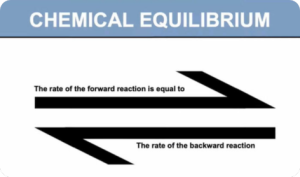
Chemical Equilibria (Digital Notes)
$100.00 Add to cartIn a chemical reaction, chemical equilibrium is the state in which both the reactants and products are present in concentrations which have no further tendency to change with time, so that there is no observable change in the properties of the system. This state results when the forward reaction proceeds at the same rate as the reverse reaction.
-
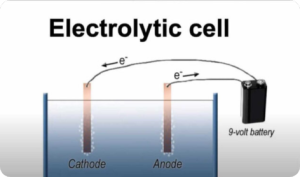
Electrolysis (Digital Notes)
Read moreElectrolysis is a process that involves the use of an electric current to drive a chemical reaction. It is a fundamental process in chemistry and is used in a wide range of applications, including the production of metals, the purification of chemicals, and the generation of electricity.
-
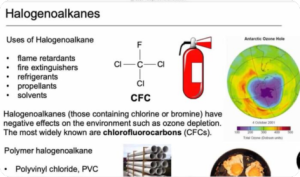
Halogen Derivatives (Digital Notes)
$150.00 Add to cartThe term “halogen derivatives” refer to the organic compounds of halogens which usually contain covalently-bonded halogens. The electronegativity of elements plays a crucial role in deciding which get to bond with halogens and which don’t. The similarity in electronegativity values of H and C render the latter to be as effective as the former to bind halogens.
-
Hydroxy Compounds (Digital Notes)
$50.00 Add to cartA hydroxy or hydroxyl group is a functional group composed of one oxygen atom covalently bonded to one hydrogen atom and having the chemical formula OH. Compounds such as alcohols, phenols, and carboxylic acids contain these groups.
-
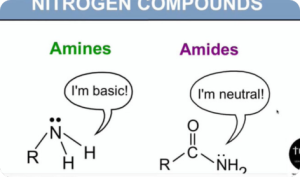
Nitrogen Compounds (Digital Notes)
$150.00 Add to cartNitrogen compounds such as urea, amine and guanidine are used to denature proteins, hence their antimicrobial properties. One special form of nitrogen compounds for antimicrobial treatment is the so-called quats or quaternary ammonium salts. These molecules have a positive charge, attracting the negatively charged cell membrane of microorganisms.