
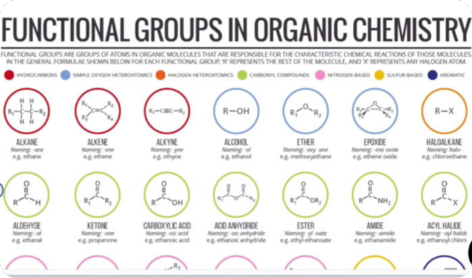
Introduction to Organic Chemistry (Stereoisomerism)
Related products
-
Gibbs Free Energy (Digital Notes)
Read moreGibbs free energy, denoted G, combines enthalpy and entropy into a single value. The change in free energy, ΔG, is equal to the sum of the enthalpy plus the product of the temperature and entropy of the system. ΔG can predict the direction of the chemical reaction under two conditions: 1. constant temperature and 2. constant pressure.
-
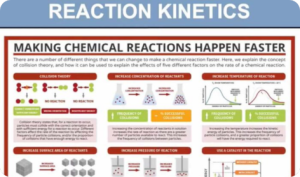
Reaction Kinetics (Digital Notes)
$250.00 Add to cartChemical kinetics, also known as reaction kinetics, is the branch of physical chemistry that is concerned with understanding the rates of chemical reactions. It is to be contrasted with chemical thermodynamics, which deals with the direction in which a reaction occurs but in itself tells nothing about its rate. Chemical kinetics includes investigations of how experimental conditions influence the speed of a chemical reaction and yield information about the reaction’s mechanism and transition states, as well as the construction of mathematical models that also can describe the characteristics of a chemical reaction.
-
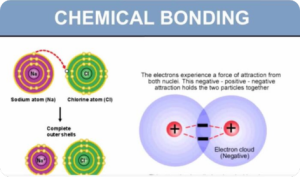
Chemical Bonding (Digital Notes)
$300.00 Add to cartChemical bonding is the interactions that account for the association of atoms into molecules, ions, crystals, and other stable species that make up the familiar substances of the everyday world.
-
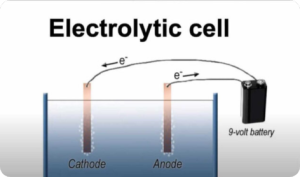
Electrolysis (Digital Notes)
Read moreElectrolysis is a process that involves the use of an electric current to drive a chemical reaction. It is a fundamental process in chemistry and is used in a wide range of applications, including the production of metals, the purification of chemicals, and the generation of electricity.